
Unsung hero: Andrew Moage
Vida Li Sik • September 19, 2021
Focus on the songleaders who help us sing.
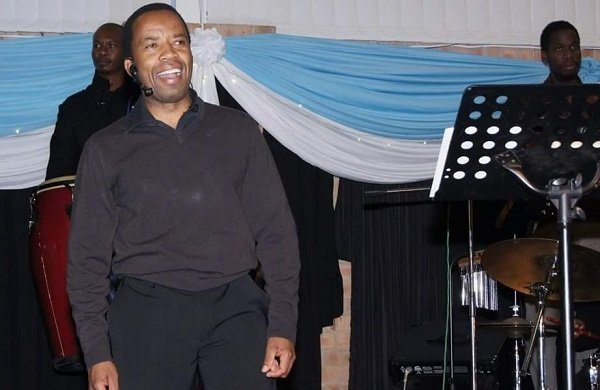
Let's give honour to some of the unsung heroes behind the scenes who worked hard to put together worship songs over the last 18 months. First up, is Andrew Moage, from the church in Tshwane. Andrew was baptised in 1994, and joined the worship team in early 1995.
What was this last year was like for the worship teams?
I never imagined a day where we'd need to record our music for the church service. It really was a challenge because we were never prepared for such.
What do you enjoy most about being in the worship team?
I just love the idea of creating music. In as much as we sing existing music written and composed by other people, there is so much that goes on behind the scenes to prepare for an engaging time of worship. The type of singing we do is very intricate—there are many elements that comes with putting together an inspiring worship experience that will be inclusive to as many as possible.
What I enjoy most is that moment when we sing the church's favourite song and you can see most disciples engaged with the song, where people are visibly taken to places where only they can be emotionally.
Is there a scripture that encourages you to sing and worship?
John 4:24 says, "For God is spirit, so those who worship him must worship in spirit and in truth." What this scripture does for me is take away the burden and sense of responsibility I carry with delivering an inspiring worship experience. This scripture says to me 'just come to God as you are, no pretence, no perfection, no worldly expectation, but in truth, and led by the spirit'. So that's why sometimes worship leaders feel like the system of church can stifle the guidance of the spirit. "In truth and in spirit" sounds to me like 80% spontaneous and 20% planned. That's authentic!
How difficult has it been to put together songs during the pandemic?
It's been difficult because we had to move from live worship to recordings. Our culture and systems have always been geared for live music as well as physical interactions with all members involved. Most members were not in a position to participate in the recordings because of a lack of capacity (resources, knowledge of the use of technology, etc).
Well, we are all excited about the prospect of meeting again for in-person services and being led by worship leaders like Andrew, and many others around our churches in Southern Africa.
More from Southern African Churches of Christ
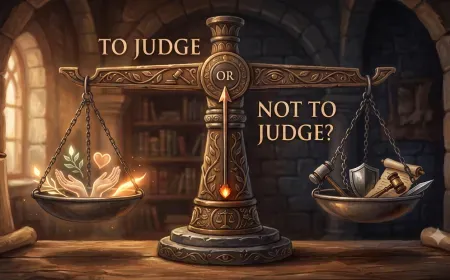
Imagine you are at a neighborhood barbecue. Your new neighbor arrives late, dressed casually, and barely speaks. Someone whispers, “She thinks she’s too good for us.” You feel the quick sting of that snap judgment. Later, you learn she just lost her husband and is quietly grieving. In that moment, you sense the discomfort of judging wrongly, a rush to conclusions that harms relationships and reveals more about our own hearts than the other person. Yet, the same evening, when another guest makes a racist joke, you feel an inner nudge to speak up. Is that also “judging”? This everyday tension captures what Jesus presents in Scripture: a divine balance between grace-filled restraint and righteous discernment. The two commands in tension “Do not judge, or you too will be judged.” – Matthew 7: “Stop judging by mere appearances, but instead judge correctly.” – John 7:24 At first glance, these seem contradictory. Don’t judge. Judge correctly. Which is it? Matthew 7 warns against a critical, hypocritical spirit that condemns others while ignoring our own faults. The context continues: “For in the same way you judge others, you will be judged, and with the measure you use, it will be measured to you” (Matthew 7:2). Jesus then uses the vivid image of someone with a plank in their own eye trying to remove a speck from another’s. Notice the aim: “then you will see clearly to remove the speck.” Self-examination is not a reason to stay silent. It is how we become safe enough to speak (Matthew 7:3-5). John 7, however, shows Jesus defending his healing on the Sabbath. He challenges the religious leaders: stop superficial, appearance-based judgments and instead apply right, truthful judgment aligned with God’s character and Word. This is not a contradiction but a divine tension, two truths that must be held together. We are called to humility and self-examination (do not judge harshly or hypocritically), while also exercising discernment and moral clarity (judge correctly, according to truth). Christianity rejects both naive permissiveness (“anything goes, no one can say anything”) and harsh legalism (constant condemnation without grace).

Welcome CJ and Sheree Wakefield to Cape Town! With decades of ministry, leadership and teaching experience, they are passionate about forming apprentices of Jesus.

Here are answers to some frequently asked questions about next year’s trip to Mt. Kilimanjaro.